Keynote Speakers
Below you can find the keynote speakers for EACL 2027. The scheduled date/time, location, and the talk title and abstract will be announced soon.
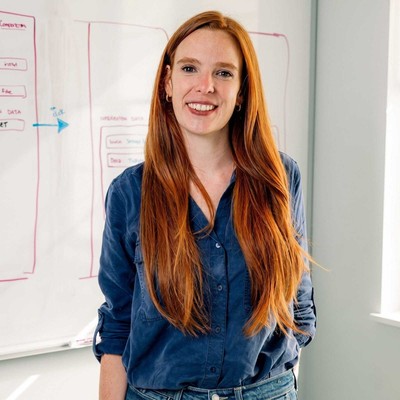
Sara Hooker
Sara Hooker is a co-founder of Adaption Labs, which builds intelligence that continuously evolves. Sara leads a large team of AI researchers and engineers that build extremely efficient, adaptable systems. Sara Hooker was previously VP of Research at Cohere and prior to Cohere, she built large systems in computer vision and NLP at Google Deepmind. Her research has been published in top venues including Nature, NeurIPS, ICML, ACL, ICLR, EMNLP, MLSys and has been recognized with honors such as the ACL Best Paper Award and CACM front cover for her work on the Hardware Lottery. Her work has been featured in mainstream news outlets including Techcrunch, New York Times, Washington Post, Axios, MIT Technology, The Atlantic.
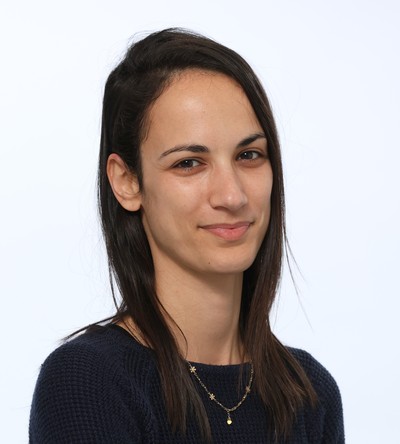
Mor Geva
Mor Geva is an Assistant Professor at the School of Computer Science and AI at Tel Aviv University. Her research focuses on understanding the inner workings of large language models to increase their transparency and efficiency, control their operation, and improve their reasoning abilities. Mor completed a Ph.D. in Computer Science at Tel Aviv University, was a postdoctoral researcher at Google DeepMind and the Allen Institute for AI, and worked as a Research Scientist at Google Research. Her work has been widely recognized by the research community. She is a recipient of Intel's Rising Star Faculty Award (2024), the Alon Scholarship for Outstanding Faculty (2024), EMNLP Best Paper Award (2024), EACL Outstanding Paper Award (2023), MIT Rising Star in EECS nomination (2021), and the Dan David Prize for Graduate Students in the field of AI (2020).
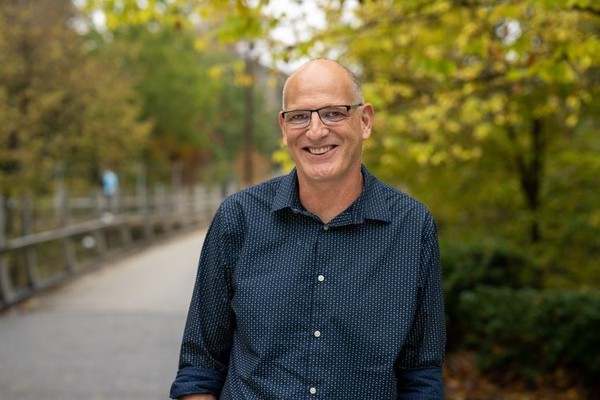
Uri Hasson
Uri Hasson is a distinguished Professor of Neuroscience and Psychology at Princeton University. He was raised in Jerusalem and earned his bachelor's degree in Philosophy from the Hebrew University. Dr. Hasson obtained his Ph.D. in Neurobiology from the Weizmann Institute in Israel and later served as a postdoctoral fellow at New York University before joining Princeton University. His research primarily focuses on the mechanisms by which the brain processes real-world information and interacts with the environment. He is particularly interested in face-to-face communication and in humans' natural language processing abilities. In recent years, Dr. Hasson's work has expanded to include large language models as a computational framework for modeling the neural foundations of natural language processes. Additionally, he explores how deep learning methods can be applied to examine the development of language in children as it occurs in their home environments.